Every job below is one we do ourselves across Goshen.
We pour driveways with four inches of compacted stone underneath and rebar instead of mesh if it's going to see any real weight. Control joints get cut the same day, before the slab finds its own place to crack. Most driveways are ready to walk on in two days and to drive on after about a week.
A patio has to pitch slightly away from the house, usually a quarter inch per foot, or you end up with water in the basement later. We can finish it broom, trowel, or stamped depending on what you want underfoot. Expansion joints go in anywhere the patio meets the house foundation so the two don't fight each other as they move.
Stamped concrete gets you the look of flagstone, brick, or cobblestone without individual pavers to settle and shift over time. We color it either through the full mix or with a surface release, then seal it after it cures so the pattern holds its color. It costs more than a plain slab, but a lot less than real stone.
A crack by itself usually isn't structural, it's shrinkage or a joint that didn't get cut where it needed to be. Sunk or heaved sections are a different problem, usually a washed-out base or expansive clay underneath, fixed with mudjacking or a full replacement depending on how bad it is. We'll tell you straight which one actually applies.
City sidewalks usually have a required width and thickness spelled out in local code, and we pour to that spec so it passes inspection. Joint spacing matters more here than people think, a joint every four to five feet keeps a narrow walk from cracking randomly.
Footings get poured below the frost line so the ground freezing underneath them doesn't heave the whole foundation. We set forms, place rebar, and pour to an engineer's spec if there's a plan, or to standard depth for a shed or small addition if there isn't.
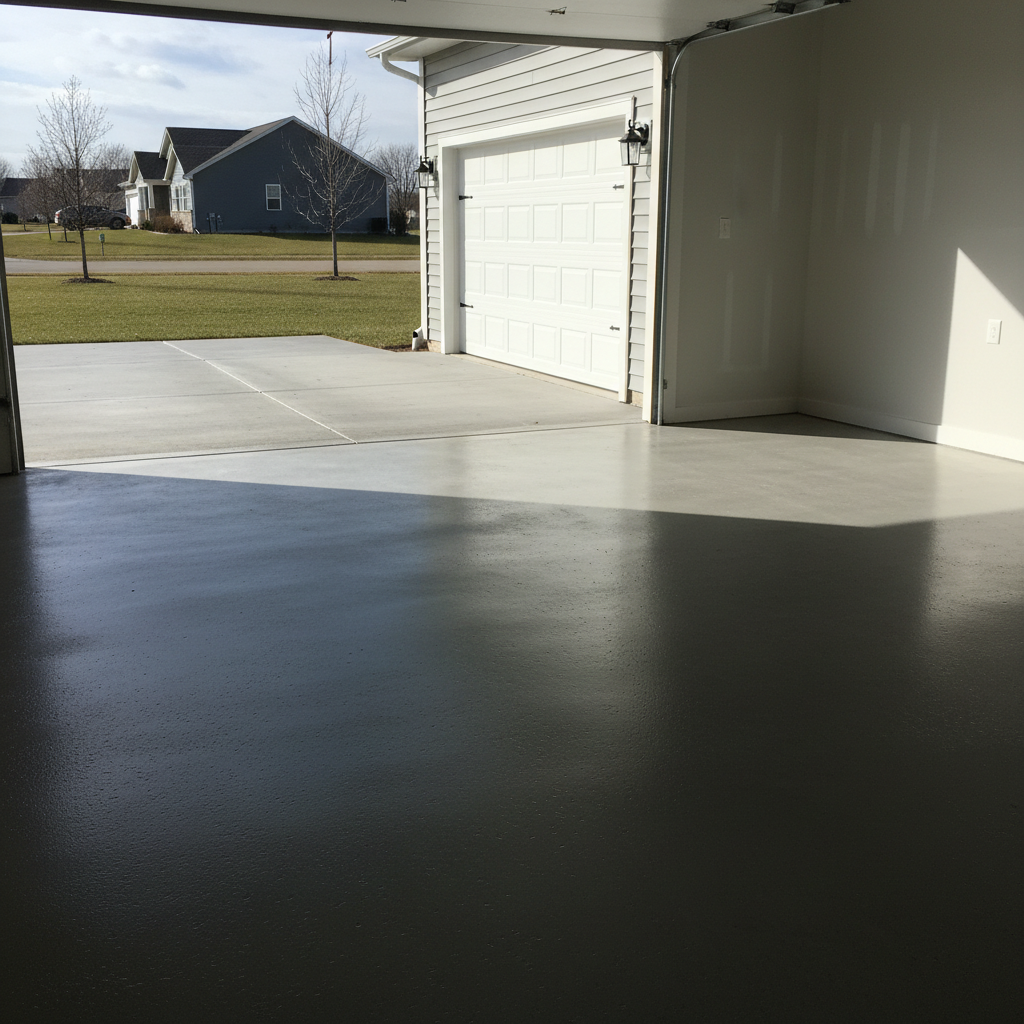
A garage floor takes a different mix and finish than a driveway because it deals with oil, road salt off your tires, and parked weight in one spot for months at a time. We can broom finish it for grip or add a sealer that keeps salt from pitting the surface over a few winters.
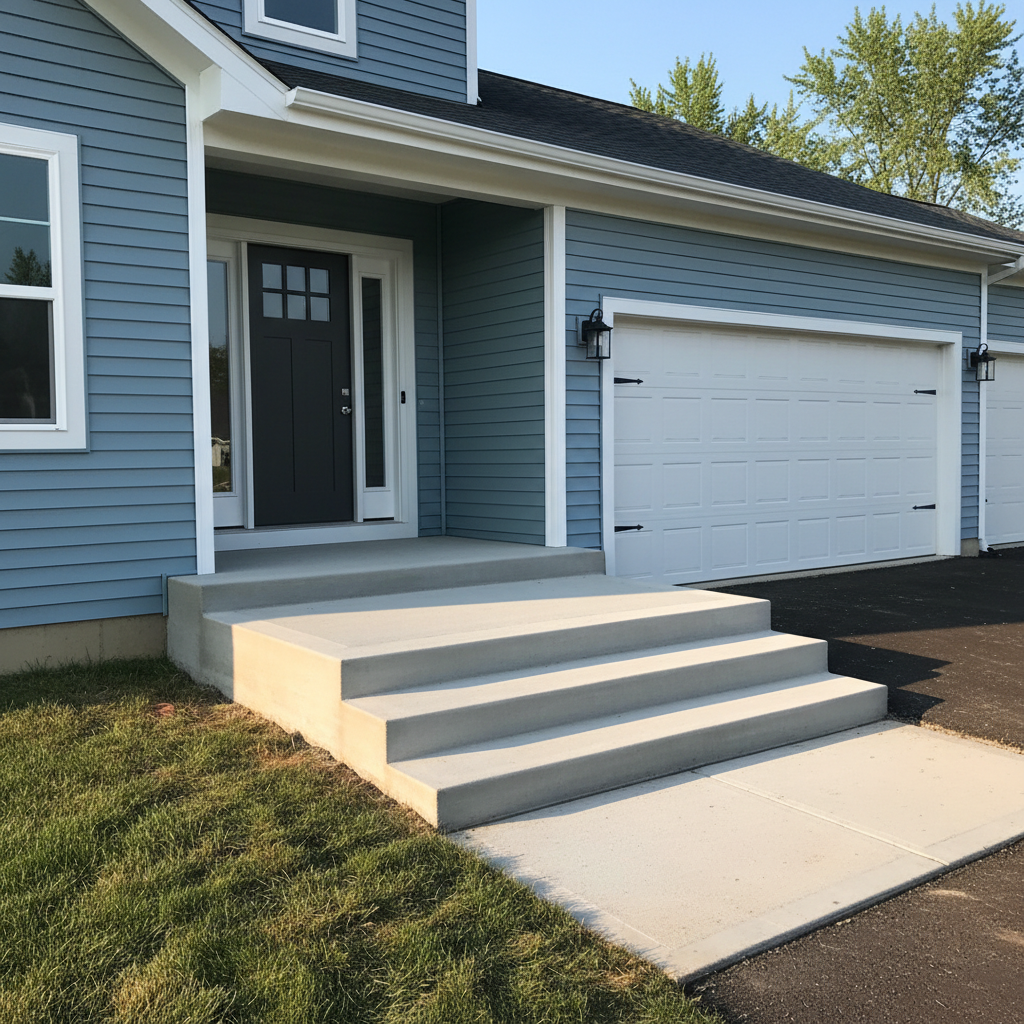
Steps have to hold a consistent rise and run or people trip, and that's as much a safety issue as a concrete one. We form and pour steps to match the house's existing grade, with a broom finish so they're not slick when it's wet or icy.
If a slab has sunk an inch or two but the concrete itself is still in decent shape, mudjacking can lift it back level for a lot less than tearing it out. We drill small holes, pump a cement slurry underneath, and raise the slab back to grade. It's not the answer for a slab that's cracked into pieces, that one has to come out.
Exposed aggregate gives you a textured, non-slip surface by washing off the top layer of cement paste so the stone underneath shows. It holds up well around pools and entryways where plain concrete gets slick.
Four steps, and no surprises in any of them.
You tell us what you want doing, we look at what is actually there, and we ask the awkward questions early.
In writing, itemised, free. If something might add cost later we flag it now rather than at the end.
Same crew throughout. We cover your floors, keep the dust down and tidy up before we leave each day.
You point out anything you are not happy with and we fix it before the invoice, not after.
Concrete work doesn't stop at the Goshen city limit.
Questions that come up once a project's actually underway.
Describe the problem and we will tell you what it probably is. No obligation.